
Occupational Safety Card Courses
You can easily get all the most common card training courses from us – such as occupational safety, hot work and railway safety training – on the same page. There are also over 20 other professional training courses in the selection. You can buy the training courses individually or several at once – the training courses are valid for 5 years. The training courses are suitable for private individuals and companies. Quantity discounts are available for larger purchases. Online training courses available every day from 7 am to 11 pm
65 000+
training days delivered
75+
training options
Over 10 years
of experience
My course packages
All Occupational Safety Courses
-

Diisocyanate training
Original price was: 49,90 €.39,90 €Current price is: 39,90 €. -

Forklift Safety Card (Occupational safety)
74,90 € -

Occupational Safety Card (TTK)
79,00 € -

Electrical Safety Card SFS 6002 Sätky
Original price was: 139,00 €.99,90 €Current price is: 99,90 €. -

Scaffolding safety and work involving a risk of falling
64,90 € -

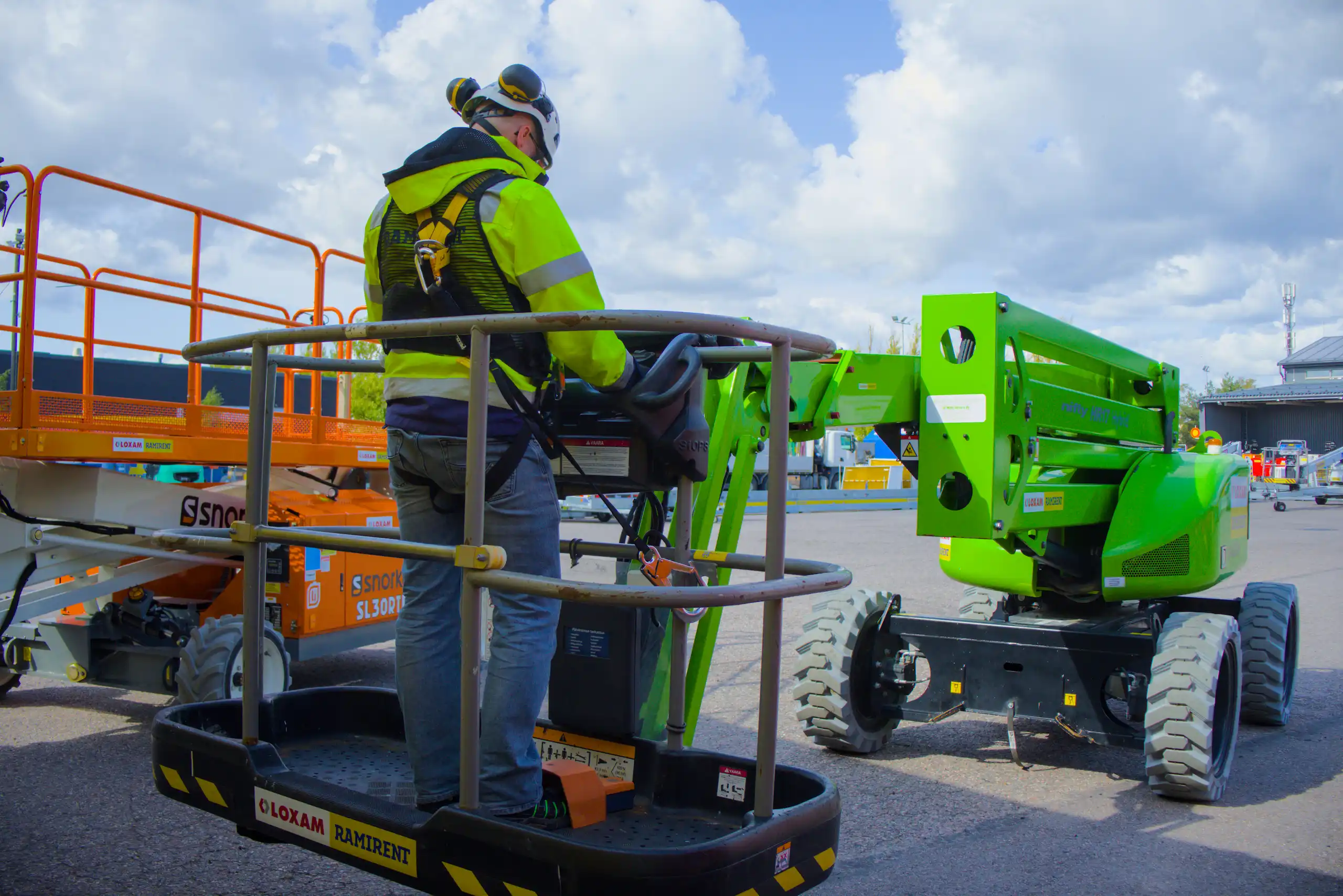
Mobile Elevating Work Platform
99,90 € -

Railway safety training
Original price was: 199,00 €.179,00 €Current price is: 179,00 €. -
SFS6002 Electrical Work and First Aid
Original price was: 159,00 €.99,00 €Current price is: 99,00 €. -

JKK First Aid 1 – 8h
99,00 € -

Hot Work Certificate
189,90 € -
Hot Work Certificate Renewal
169,90 € -
First aid + Scaffolding safety and work involving a risk of falling
129,90 € -
Personal Lifting Certificate + TTK Occupational Safety Certificate
139,00 € -

Degree in Plant Protection
29,90 € -
Basic Fire Safety Training AS1 (2 hours)
79,90 € -
ATEX – Training for areas at risk of explosion
99,00 €
Occupational safety: the definition and the obligations
Occupational safety aims to improve working conditions and safeguard employees’ health as well as both physical and mental wellbeing. By law, the employer must ensure that work does not cause excessive strain, and that the methods, equipment and environment do not harm employees’ health. In practice, this means identifying risks, and taking preventive measures to ensure safe work.
Occupational safety is built on four main areas:
- Work environment – physical conditions, equipment, machinery and facilities
- Work community – constructive interaction and a good atmosphere
- Safety management – integrated into the organisation’s management and operating system
- Safety competence – adequate training and instruction
In line with the Occupational Safety and Health Act, safety is managed through systematic risk assessment. The goal is to identify hazards and risks present at the workplace and to prevent accidents and occupational diseases proactively.
Workplace safety
At a safe workplace, work runs smoothly and risks are controlled. Concrete measures include:
- Safe workspaces: lighting, air quality and noise are managed, and routes are kept unobstructed.
- Induction and instructions: employees are trained in work methods, the use of equipment and in recognising hazards.
- Duty to report: every employee reports observed safety deficiencies, near misses and accidents.
Safety at a shared workplace
Across many sectors — such as construction sites, ports, industrial facilities and logistics centres — several employers, contractors or independent workers operate at the same site. In such situations, clear responsibilities and communication are required to ensure safety:
- The party exercising overall control (e.g., the main contractor at a construction site or the terminal operator in a port) is responsible for the general safety arrangements, providing information about site-specific hazards and organising inductions.
- Other employers and independent contractors inform others of the hazards arising from their own work so that risks are not transferred to other parties.
Construction sites
Construction environments are physically demanding and constantly changing. Typical risks include:
- Falls from height when working in elevated positions
- Noise exposure and its impact on hearing
- Different dust types, including concrete dust and asbestos
- Changing weather conditions and slippery surfaces
- Lifting and moving heavy loads
Construction work must comply with the Government Decree on the Safety of Construction Work (205/2009). Employers must provide appropriate personal protective equipment, and every employee is responsible for following safe practices.
Ports
Ports are shared workplaces where numerous operators, equipment owners, cargo owners and stevedoring companies work side by side. Typical risks include:
- Heavy machinery and vehicle traffic (cranes, forklifts, vessel loading and unloading)
- Equipment used for transferring and lifting goods
- Changing environmental conditions, such as slippery quays and varying weather
- Handling large containers and congested transport routes
Responsible parties ensure that everyone has the correct PPE (e.g., hard hat, high-visibility clothing, safety footwear) and receives sufficient induction on access routes and working methods.
Industry
In industrial environments, production lines, machinery and processes are often extensive and complex. External service providers (e.g., maintenance contractors) may also work in the same spaces. Typical risks include:
- Machine and process guarding, automatic lines and their hazard points
- Chemical safety (storage, handling, possible leak and explosion risks)
- Ergonomics related to heavy or repetitive work
- Noise and vibration exposure
- Fall and slip hazards in production facilities and along travel routes
The employer ensures that employees always have up-to-date information on machine limitations and restrictions, as well as on emergency procedures in case of incidents.
Logistics
In logistics — for example, distribution centres or warehouses — multiple companies can operate under one roof. Typical risk factors are:
- Simultaneous operation of forklifts and other vehicles
- Shelving of goods and safety of high racking systems
- Repeated handling of heavy loads
- Collision risks in areas with extensive pedestrian and vehicle traffic
To maintain safety, common rules must be observed by all parties: designated routes, speed limits and warehouse markings. Every employee must receive training in safe forklift operation.


